To live near Mount Etna is to exist between two worlds – one of quiet olive groves and coastal calm, and another defined by smoke, fire, and constant change. On Sicily’s eastern edge, Etna rises like a living myth, shaping the rhythm of life for the people who call it home. The volcano’s presence is both beautiful and unpredictable – a natural monument that commands respect and awe. Here, ash sometimes dusts the vineyards, tremors roll like passing thoughts, and the mountain’s glow lights up the night sky like a pulse.
Yet life under Etna is not a story of fear; it’s one of deep connection. The locals have learned to read the mountain’s moods the way sailors read the sea. Its fertile soil yields vineyards, citrus groves, and chestnut forests that make this region one of Italy’s richest agricultural zones. For travelers seeking authenticity and adventure, Sicily vacation packages often include stops in the Etna foothills, where you can explore volcanic trails and small family-run farms. Those who prefer guided cultural immersion can choose Sicily tour packages that balance history, cuisine, and landscapes shaped by the volcano’s hand.
A more personalized approach comes through a Sicily tour packages plan that focuses on living traditions – like honey harvesting from ash-fed wildflowers or cooking classes that feature ingredients grown in volcanic soil. Travelodeal offers flexible itineraries that help visitors experience these fiery contrasts firsthand, from the vineyards of Linguaglossa to the crater rims where ancient myths still seem to breathe.
The Rhythm of a Volcanic Life
For those who live here, Etna isn’t just scenery; it’s a neighbor. Its eruptions, far from deterring people, mark time in the same way city dwellers mark seasons. The locals speak of it affectionately – a muntagna, “the mountain” – as if it were an old guardian. They’ll tell you how it fertilizes the land, how its ash feeds their vines and how, even when it rumbles, they trust it to take care of them. It’s not a threat; it’s a presence that shapes their stories, songs, and livelihoods.
Villages like Zafferana Etnea and Nicolosi have built a balance between resilience and reverence. In spring, residents celebrate the mountain’s bounty with honey festivals; in winter, they welcome skiers to its snowy slopes. Etna is part of daily life, its moods woven into conversation like weather in other places.
What Visitors Experience
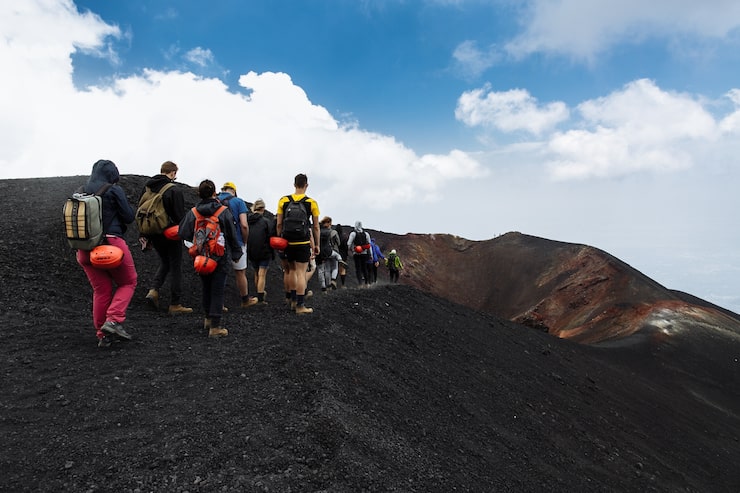
Visiting Mount Etna is unlike any other trip to Sicily. The drive from Catania begins in coastal warmth and ends in crisp mountain air, with lunar landscapes of black rock and steam rising from the earth. Guided hikes lead you across cooled lava fields, through pine forests, and to lookout points where the land below stretches to the sea. Every eruption rewrites the geography, carving new paths and valleys for those who explore.
Many visitors combine their time on Etna with wine tasting tours in nearby villages. The volcanic soil here gives birth to some of Italy’s most distinctive wines – reds with smoky notes and whites that carry a hint of the sea. These tasting sessions often end with meals of grilled sausage, fresh ricotta, and roasted chestnuts – dishes that capture the mountain’s essence.
Myths and Modern Meaning
Etna has inspired countless legends. The ancient Greeks believed it was the forge of Hephaestus, the god of fire, where giants were trapped beneath the earth. Today, it remains a symbol of creativity and endurance. The people who live around it carry a sense of quiet strength – a reflection of the volcano’s unpredictability and grace.
In modern times, Etna’s eruptions have even become an attraction in themselves. Locals and travelers gather safely at observation points to watch fountains of lava cascade down the slopes, an experience that’s both humbling and hypnotic. To witness Etna in motion is to see the planet breathe.
Final Thought
Life under Mount Etna is a blend of risk and reward – a reminder that beauty often comes from the most unpredictable forces. For locals, it’s a lifelong relationship; for visitors, it’s a chance to stand between creation and destruction, awe and peace. Etna doesn’t just define the landscape – it defines the spirit of Sicily itself.